
By Emily Bellard · October 26, 2026
October gave us two scenes that belong in a movie. In one, millions of people hit the same webpage at five in the morning, credit cards in hand, all racing to buy a phone that folds. In the other, a sports car jumped off the ground and hovered in midair on thrusters while a crowd filmed it on their phones.
Both made headlines. Only one had a date when customers could actually expect to get it. Here's what actually arrived in the past couple of weeks, and what only looked like it did — that difference, tiny on the surface and enormous underneath, is what this piece is about.
A precision note before we go further, because it is the whole argument in miniature: this piece was drafted as the preorders closed, when the first deliveries were still in transit — and we will keep our dates honest the whole way down. Preorders opened October 16, and availability began October 23: the first customers started taking actual delivery that day, though supply stayed tight — new orders were still showing delivery estimates landing in late January 2027, and some carrier orders slipped into November. So where does this piece stand now? Between the preorder and the doorstep — but much closer to the doorstep than the Roadster is to a driveway. A preorder is closer to arrival than a demo is — and the distance between a preorder and a doorstep is exactly the distance this piece is about.
One device had moved from announcement to checkout, and beyond it: thousands of people had already handled the real thing. Apple seeded journalists with hands-on units in September, and by mid-October flagship stores were being equipped with dozens of demo units so any walk-in customer could test the hinge and the software before October 23. There were even “Today at Apple” sessions built around greeting the new phone. That is a real-world demonstration by actual users — a far cry from a prototype hovering in a glass case. The other device had moved from announcement to demonstration only, with production expected in 2028. The difference between those stages tells us more about technology trends than another round of breathless predictions ever could.
The useful question isn’t only “Can they show it?” It’s “When can someone actually use it?”
One was ready for a shopping cart
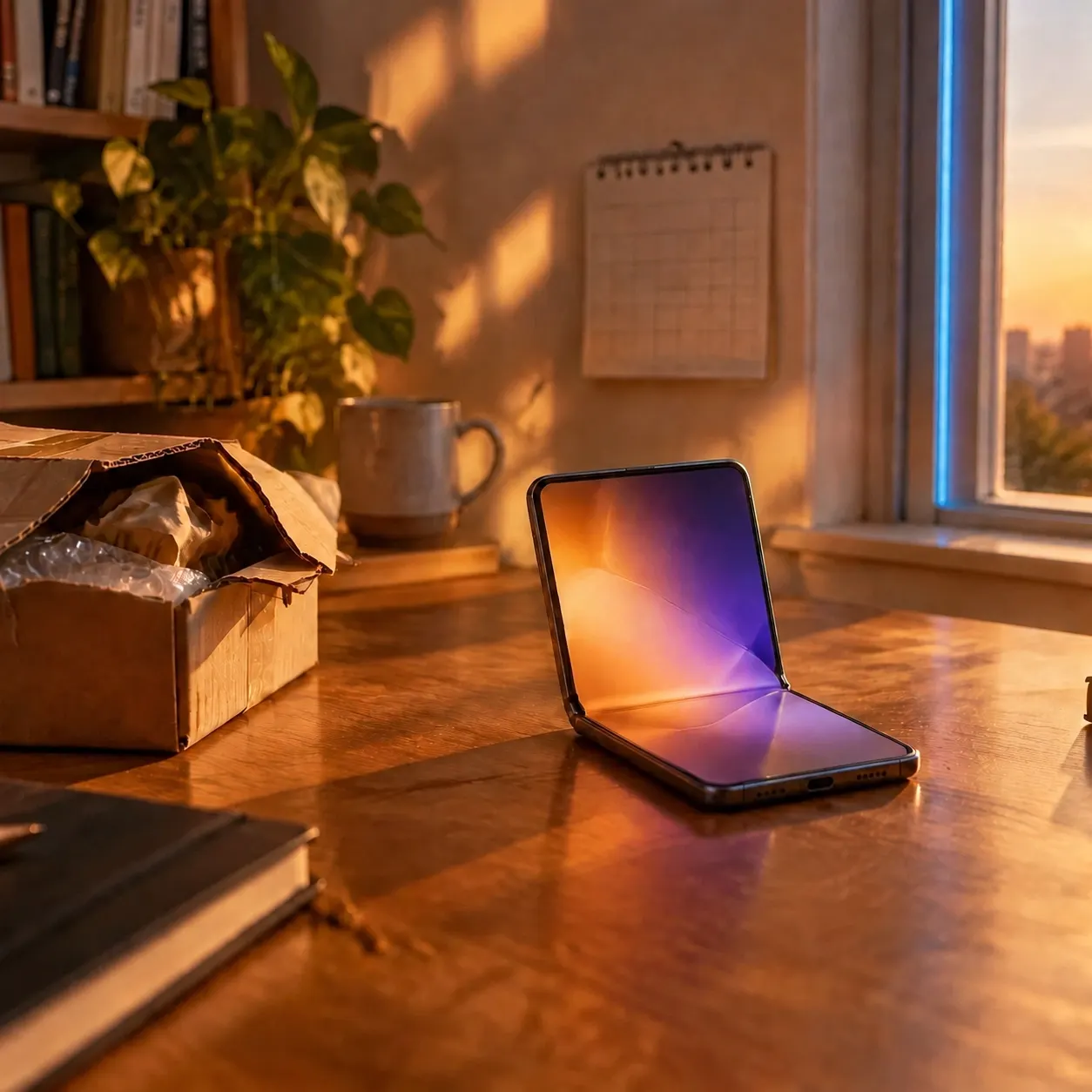
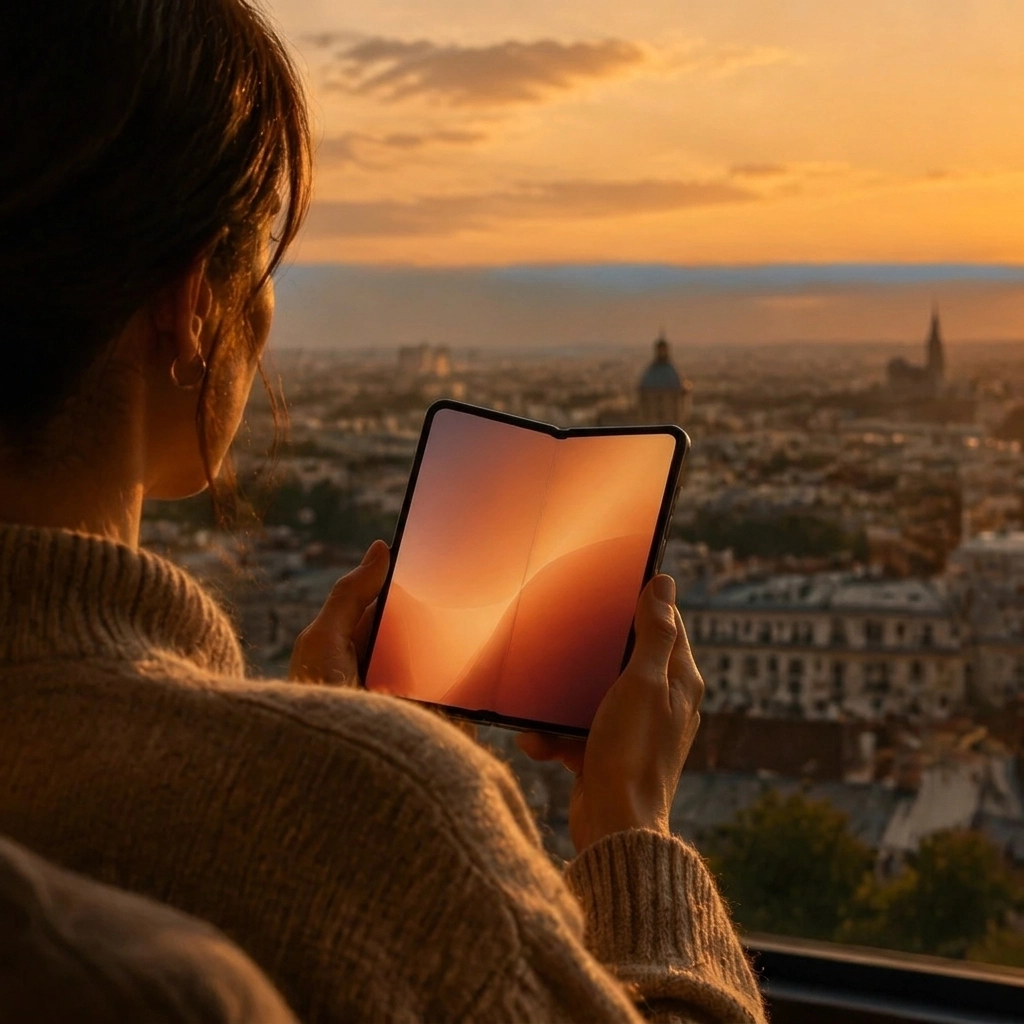
Here is the thing that had a price tag: Apple’s first foldable iPhone, the iPhone Duo, with a 5.4-inch outer display and a 7.6-inch inner screen, starting at $1,999. Preorders opened October 16, with availability scheduled to begin October 23. A real page, a real price, a real date you could circle.
First is worth pausing on, because the word is doing real work here. Foldable phones themselves are not new — the first commercial Android foldable, the Royole FlexPai, shipped in October 2018, and Samsung’s Galaxy Fold followed in 2019. The category has had roughly eight years of public life, with several makers iterating on hinges, creases and software the whole way. What arrived this month is Apple’s first entry — a latecomer to a mature category, which is its own kind of story. Apple has a long record of arriving after the pioneers and changing what the category is for. Whether the Duo does that again will not be settled by preorder numbers; it will be settled by what people do with the big screen a year from now.
Then the calendar did what calendars do: it began to matter. Within hours, The Verge reported that delivery estimates for new orders had moved into January 2027 — and when launch day came, the first wave of preorders did reach customers, while some carrier orders slipped into November. That's the honest shape of it: most early buyers got the phone on day one, latecomers faced a wait measured in months. Both things were true at once, and interested buyers had something concrete to respond to: a price, a preorder page, and an estimated delivery window. A preorder is not a product review, and it is not full arrival either. It doesn't tell us how the hinge holds up after months of use, whether the larger screen changes anyone's habits, or whether $1,999 feels like money well spent. It does mark a significant transition: an idea has become something a customer can try to buy — and as of October 23, something early customers actually received. There is still room to fail between here and the doorstep for everyone still waiting in the queue — and that room is exactly where the next announcement will do its work. That’s a meaningful moment in the life of a technology. The first announcement asks us to imagine. A preorder asks us to decide. And a first week with the thing in hand? That’s the part where we find out what the promise was actually made of.
The first week, as users actually lived it
Here is where this story gets honest. Because the Duo did what the Roadster didn’t — it reached hands — the first week of real use is now part of the record, and it is a genuinely mixed one.
Start with the good, because there is a lot of it. Reviewers who spent a full week with the device describe it as refined, if not perfected: a matte inner display that keeps the crease out of sight under normal lighting, an app-pairing system for the big screen that’s being called the best in the foldable category, and battery life that, in several testers’ hands, outlasted the Galaxy Z Fold 8. Owners posting in the first days describe the seamless switch between the cover screen and the big inner canvas as the moment the form factor finally clicks. One reviewer — Macworld’s roundup — summed the mood up as “a little weird, a lot of fun, and a breath of fresh air.” Even the skeptics’ verdicts read as fond: quirks like Touch ID on the side instead of Face ID, a fussy right-edge navigation gesture, and some apps that haven’t been rebuilt for the big canvas yet — none of which stopped the same reviewers from calling it incredible.
Now the part Apple didn’t script. Within days of launch, early buyers began reporting the inner display cracking along the hinge — audible sounds, then bright lines or dead pixels down the fold. The reports spread across forums and social media fast enough that the coverage earned its own nickname. On October 26, Apple acknowledged the issue, describing it as affecting a small number of units and directing affected owners to AppleCare for replacements; as of this writing the company has not identified a cause. Worth saying plainly: there is no verified number for how many units are affected — what exists is a pattern of owner reports, a company response, and a replacement path. That’s a real early-life problem, not a proven epidemic, and the honest way to hold it is exactly that: real, unresolved, and being counted in public.
And here is the thing worth noticing about the shape of that week, because it’s the part that belongs to our argument: the same product generated enthusiastic hands-on praise and a public reliability scare in the same seventy-two hours, and both are now part of what the Duo is. Not the marketing. Not the demo. The record of actual use — the thing that only exists after arrival.
And while everyone watched the headline number, a few quieter details slipped out that are honestly more fun than the price. Apple opened a “Get Ready” window days before preorders went live, so buyers could configure the phone, secure financing pre-approval, and stage the order in their bag ahead of the opening hour — 5 a.m. on the West Coast, 8 a.m. on the East — like a digital dawn raid with paperwork. The Duo Folio and Case arrived the same morning, in colors named navy blue, taupe and sand. And my favorite small thing most people missed: the front camera for the inner display sits underneath the screen, so there is no notch and no cutout interrupting that big foldable canvas. None of it changes the world. All of it is the kind of thing you only learn from the paperwork — which is where the real arrival lives.
Anyone who has preordered a console, a graphics card, or a phone knows the rest of the ritual, because it repeats every time. The page loads at the stroke of the opening hour and the queue swallows you. The configuration you wanted is gone before you finish choosing it. The delivery date you ordered against quietly becomes a week, then a month, then a season. You refresh the order page hoping to catch it before it moves again. And the supply conversation starts: did they make enough, will the scalpers take the rest, is the thing you actually ordered going to arrive at all?
None of that chaos means the preorder was fake. It is what the arrival stage actually looks like up close: capacity is finite, logistics are slow, and demand shows up all at once for something that has been anticipated for years. The preorder chaos is not a bug in the arrival — it is the arrival, experienced from the customer’s side.
Apple’s announcement lays out the hardware and release schedule; The Verge’s preorder coverage tracks the price and early ordering, and their follow-up on orders moving into 2027 shows the estimates shifting in near-real time. The details matter, but so does the simple fact that there is now a path from curiosity to a box on someone’s doorstep.
One carried its family name into the air
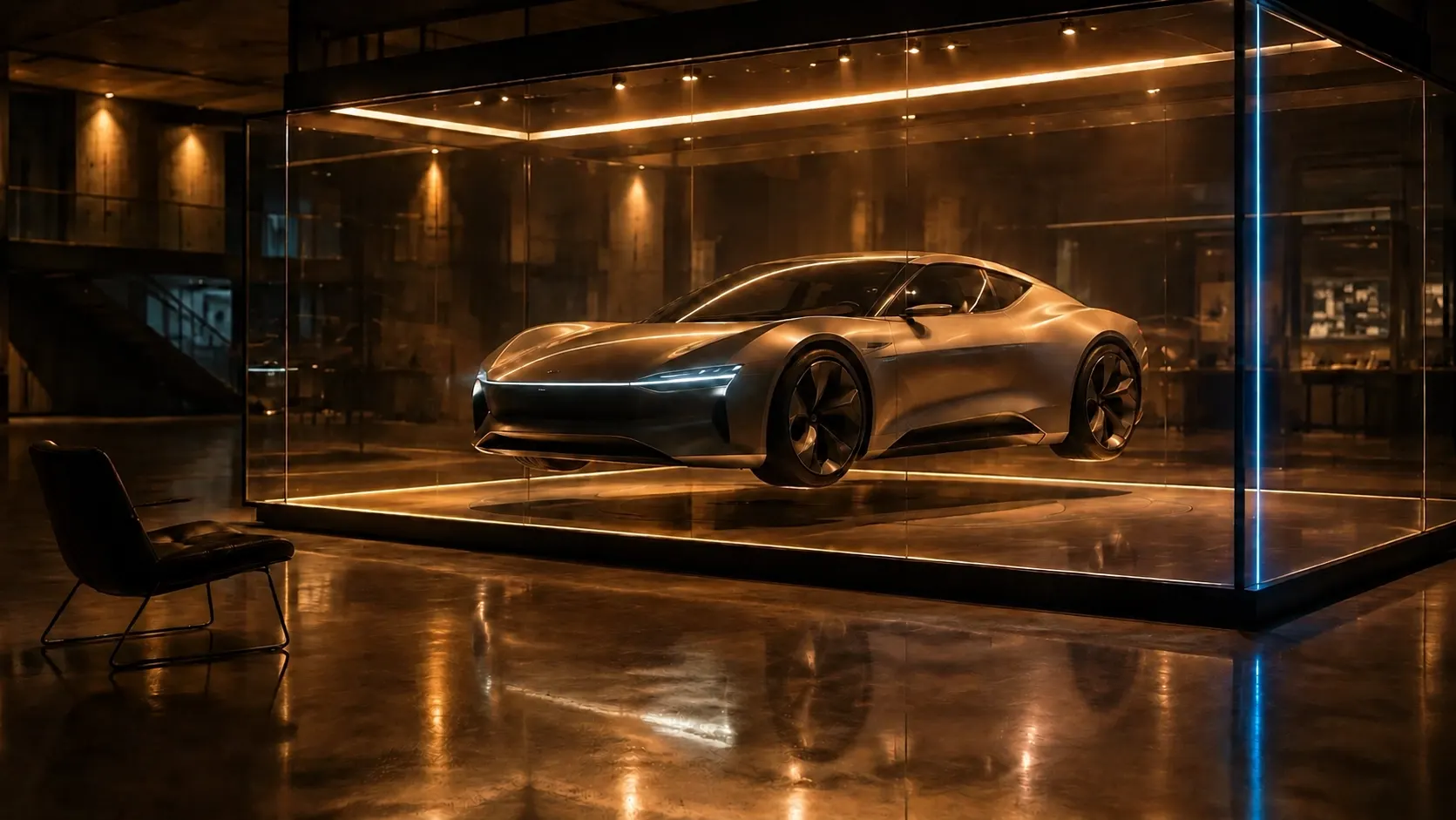
And here is the thing that had a spectacle: the next-generation Tesla Roadster, which jumped into the air at a livestreamed event Thursday evening in the US — Friday, already, in China — and performed midair maneuvers on cold-gas thrusters. It looked incredible. The clips are genuinely worth watching. It was also a demonstration, not a customer delivery — and that distinction is the whole game.
Before we grade the flying part, it is worth remembering what the name on the door used to mean — because the original Roadster earned it on the ground, and it earned it the same way the Duo just did: by arriving.
In 2008, the first Tesla Roadster became the first highway-legal production electric car built on lithium-ion cells — Tesla’s own announcement marked the start of regular production that March, and roughly 2,450 of them reached real customers between 2008 and 2012. It did 0–60 in under four seconds on a charge, and it did something no press release could: it made an electric car desirable. Before it, the electric vehicle was widely imagined as a golf cart with ambitions. After it, the question changed from whether electric cars could be fast to when everyone else would catch up. It paved the road for the Model S, and the Model S paved the road for the industry everyone now argues about. That car didn’t demo. It shipped, it got driven, it got reviewed, it got loved and complained about — it lived the full sequence we just watched the Duo complete in a single month.
Which is what makes this October’s spectacle so interesting. The flying Roadster carries the name of a car that closed the distance between announcement and arrival. Its successor has spent nine years working on it: announced in 2017, repeatedly refined — and now targeting production in 2028 with a thruster package that comes straight out of the SpaceX playbook. The Wall Street Writing talked to reservation holders who put down deposits as far back as 2017 — some $50,000 — and are still waiting nine years later. That patience says something real about the promise: nobody holds a deposit for nine years over an ordinary product. The vehicle wearing the family name is taking the long road — and its first public act, the most spectacular demo of the year, suggests the destination is worth it.
Tesla has said production is expected in 2028. That is a target on the horizon, not a delivery date in a buyer’s calendar — but the horizon is real, and the engineering on display this month suggests it is being taken seriously. And the distinctions between versions matter: reporting on the reveal describes the thruster-equipped Rocket version as not approved for public-road use, while Tesla presents a different Performance version as road-ready. “The flying car” makes a memorable headline; it can also blur what is actually being offered.
A demo proves that something was demonstrated. It may show engineering work, suggest a possible direction, or give people a spectacular clip to share before dinner. It does not, by itself, establish when an everyday customer can buy, drive, or safely use the thing they just saw.
None of this is a knock on the spectacle — for the record, we loved the spectacle, and there is real poetry in the same company that once proved EVs could outrun gas cars now making one fly. A dramatic demonstration can be technically interesting and worth watching. It’s simply a different kind of evidence than a published shipping estimate — and the customers who have held their deposits for nine years, by all accounts still cheering, seem to understand that better than anyone.
Shipping dates are forecasts. Demos are invitations to imagine.
A delivery estimate is not a guarantee. Supply changes. Schedules slip. A product can arrive and still disappoint. But an estimate is attached to a real-world process: inventory, fulfillment, and a customer waiting for an order.
A demonstration is useful too, but it answers a different question. It says: This is what we can show you now. It does not necessarily say: This is what you can expect to have, and when.
That distinction is easy to lose in a news cycle built for the most shareable moment. A phone unfolds; a car flies; the video loops. The product page and the delivery window are less cinematic, but they may tell us more about how close an idea is to everyday life.
The gap between announcement and arrival is not a technicality. It is where a technology’s meaning begins to take shape. Before people can use something, they can only imagine it. After it arrives, they can find the flaw in the hinge, the unexpected use for the big screen, or the reason it stays in the drawer — and in the Duo’s case, within a single week, they found several of each.
That is true well beyond phones and vehicles. The future of AI, too, isn’t decided by the boldest description of what a system might do. It takes shape as features become available, as people encounter their limits, and as ordinary use reveals what the promises left out. We explored the public side of that question in “AI Got a New Name at the White House” and, more broadly, in “Who Decides What AI Can and Can’t Do?”.
The hurdles live between the demo and the doorstep
Getting from a memorable demonstration to a useful product is not one hurdle. It’s a long series of them.
For a foldable phone, the real test unfolds through daily handling: opening and closing, carrying it around, finding apps that make good use of the larger screen, and deciding whether the extra flexibility earns its price. The Duo’s first week just gave everyone a preview of what that testing looks like in public — thousands of uncontrolled trials, running simultaneously, in people’s pockets. For a vehicle meant to lift into the air, the questions are even more fundamental: what version is intended for public roads, what rules apply, and what must happen before a prototype can become a product people can use as advertised?
None of those questions can be answered by the most dramatic minute of a launch event. They require testing, manufacturing, clear specifications, and, in some cases, regulatory approval. That work is less photogenic. It is also the work that turns a promise into a practical object.

The technology trends worth watching are the ones that reach us
It’s tempting to treat the boldest announcement as the best forecast of what comes next. But the more useful question is what changes once a technology crosses into people’s lives.
Does the product become available when expected? Does it work outside a controlled demonstration? Does it make an everyday task easier, or give us a new task called “managing the clever feature”? And when the first rush of attention fades, does the thing still matter?
The Duo gave us early answers to all four inside a single week. Available when expected: mostly, with a wait for latecomers. Works outside a controlled demonstration: for most owners, impressively — for a smaller, unquantified number, painfully. Makes the everyday easier: the owners who love it really love it. Still matters when the attention fades: ask us in a year, when the crease has been folded and unfolded tens of thousands of times.
Those questions are less dazzling than a flying car. They are also better company for anyone trying to understand the future of technology without turning every launch into a prophecy — and honestly, the flying car will still be flying in the clips when we’re all wondering whether the foldable earned its keep. Both stories deserve that kind of attention, because both are at the start of something, not the end.
The foldable and the Roadster were not simply two competing products. They marked two different distances from the idea to the customer — and the Roadster’s own family history is the proof that closing that distance is possible. The original Roadster did it for electric cars. Its flying successor is on its way to doing it again.
That’s why this is more than a gadget story. It’s a way to read technology trends, and the Duo’s first week just handed us the complete set: notice what was announced, then watch for the date, then read what the people who received it actually experienced. The announcement gave us the spectacle. The shipping date gave us the promise. The first week gave us the truth — the praise and the cracks, sometimes literally, in the same seventy-two hours. The Roadster is still on step one of that sequence, with nine years of anticipation banked behind it. Great arrivals have started later than this one — the original Roadster spent decades of electric-car history proving that.
The habit we’d offer you is simple, and it is the one this piece has been practicing: when the next announcement lands, don’t ask whether it looked impressive. Ask what date it gave you. Then, when that date passes, don’t stop reading — that’s when the real story starts. Hold the date to account, and then hold the arrival to account too. They are the most boring questions in technology, and they are the ones that turn out to be right.
The three-line version, if you want to settle a dinner-table argument this week:
- A demo answers “can they show it?” A shipping date answers “when can you have it?” Only one of those is a promise about your life.
- “First” always has a footnote. Apple’s first foldable arrived eight years after the category did — and its first week brought both the best-in-class praise and the first cracked screens. Ask which first is being claimed before you grade the entrance.
- The chaos at checkout is not a sign the product is failing. It is the arrival, experienced from the customer’s side.
- Ask what arrived, not what was announced. Then stay for what happens after — the first week of real hands is where the promise meets the truth, and where the future actually starts being built.
We’ll keep watching all three stages of that sequence — the announcement, the date, and the first week of real hands. And there is genuine reason to look forward to all three. The Duo’s first week, cracks and all, is evidence that the foldable era is finally real enough to have growing pains — and growing pains are what a technology looks like when it is actually becoming part of life. The flying Roadster, whatever its delays, is a company applying its signature obsession to a machine nobody has dared to build. The most exciting part of both stories is not the announcement we already watched. It’s what these things become once the hands get hold of them — and that part is just beginning.
We expect to keep coming back to stories that land in real products, real shipping estimates, and real defaults, and to follow them through the weeks that matter — the ones where promises arrive, get tested, get repaired, and sometimes get better. If you want the version of tech news that stays for what happens after the launch, you have already read the first one.
More from AiZeryn: AI Got a New Name at the White House · Who Decides What AI Can and Can’t Do?
Some images here were generated with AI; they are illustrative scenes built for this piece, not documentary photographs.
If you like the argument, we make it properly on LinkedIn: consequences, tradeoffs, and the parts press releases skip. Read us there
If you like the mess, we're on Facebook: family group chats, settings screens nobody reads, and the jokes that arrive late. Meet us there
Sources
- Apple: “Apple unveils iPhone Duo”
- Apple: “Open up to new possibilities with iPhone Duo”
- Reuters: “As Apple prepares to make a splash, a brief history of foldable phones”
- MacRumors: “You Can ‘Get Ready’ for iPhone Duo Pre-Orders on October 12”
- The Verge: “The iPhone Duo is now available to preorder at $1,999”
- Bloomberg: “iPhone Duo Hands-On: Apple’s First Foldable Phone Makes Strong First Impression”
- Digital Trends: “Apple is making sure you can’t walk into a store without bumping into the iPhone Duo”
- The Verge: “iPhone Duo orders are already delayed into 2027”
- AppleInsider: “The iPhone Duo finally makes its way into customers' hands”
- GSMArena: “iPhone Duo is now shipping”
- PhoneArena: “Verizon has bad news for iPhone Duo buyers”
- Macworld: “A week with iPhone Duo: Folding refined, if not perfected”
- Macworld: “iPhone Duo review roundup: A little weird, a lot of fun, and a breath of fresh air”
- 9to5Mac: “iPhone Duo one day later: Here’s why its quirks don’t make it any less incredible”
- The Verge: “The first broken iPhone Duos are here”
- The Verge: “Apple acknowledges iPhone Duo display ‘issue’ after reports of cracked screens”
- MacRumors: “Apple Responds to iPhone Duo Display Cracking Reports”
- Ars Technica: “Some iPhone Duo screens are already failing”
- PhoneArena: “iPhone Duo 2 release date expectations, price estimates, and upgrades”
- CNBC: “Tesla unveils long-delayed Roadster developed with SpaceX, fueling merger speculation”
- Tesla Investor Relations: “Tesla Motors Begins Regular Production of 2008 Tesla Roadster”
- Car and Driver: “2008 Tesla Roadster Road Test”
- Motor Trend: “The Future of Tesla Motors”
- MIT Technology Review: “Tesla Roadster”
- WIRED: “Tesla’s Roadster 2 Is Late—and Entering a Different EV World”
- The Wall Street Writing: “They Paid $50,000 and Waited Nine Years. Will Tesla’s Roadster Live Up to the Hype?”
- Car and Driver: “20 Years Ago, a Ride in a Tesla Roadster Changed Me”
- The Verge: “The incredible flying Tesla Roadster is just for show”
Sources verified October 26, 2026.

